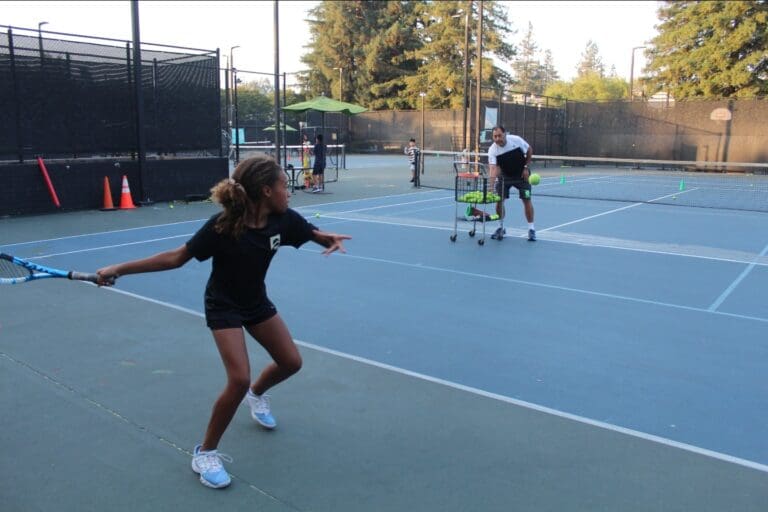
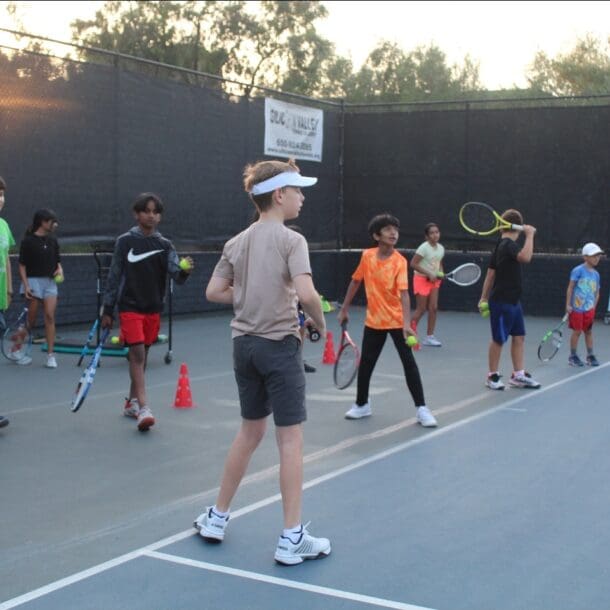
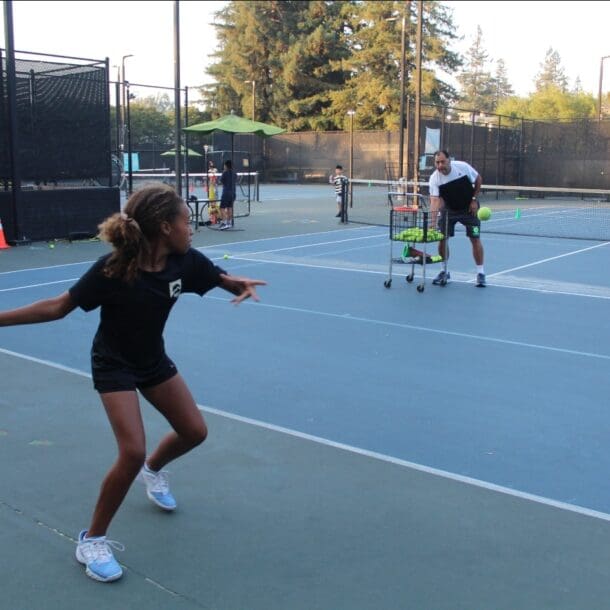
When competitive adult players search for premiertennis lessons in Mountain View, they are typically focused on upgrading their physical toolkit. They want to add velocity to their first serve, find more top-spin on their baseline groundstrokes, or carve out a sharper slice backhand. However, as the coaching staff at theSilicon Valley Tennis Academy (SVTA) frequently emphasizes, a player’s physical mechanics are only as effective as the mental framework that governs them. Under the expert direction of head coach Coach Francisco Ruiz, players in our intensive training programs and tennis classes learn that true mastery of the sport is a product of combining physical drills with strategic, process-oriented mental habits.
One of the most powerful, yet deceptively simple, mental strategies taught in our academy curriculum is the non-negotiable instruction to “expect the ball back”. While it may sound like standard court advice, sports science research published by Suresh Kumar Sonachalam and Edward Horne demonstrates that this simple shift in perspective carries far-reaching psychological benefits that directly impact a player’s concentration, physical balance, and mechanical consistency. At theSilicon Valley Tennis Academy, we integrate this methodology directly into our training to help intermediate and advanced competitors break through persistent performance plateaus.
The Danger of the “Hope Trap”
To understand the immense power of this mindset, one must first recognize the common psychological pitfall that plagues recreational and club-level players: the transition from active anticipation to passive hoping.
Imagine you are locked in a baseline rally. You execute a deep, penetrating forehand that forces your opponent wide. Instead of immediately recovering and preparing for the next shot, a typical player will stand still, watch their ball fly through the air, and hope the opponent either misses it or fails to reach it.
This passive “hope state” is highly damaging to your overall performance on the court. Psychologically, hoping for your opponent to make a mistake breeds a passive, defensive mindset, physical tension, and performance anxiety. You are essentially wishing for the point to end, which removes you from the flow of active play.
More importantly, if your opponent does manage to retrieve your forcing shot and scramble it back over the net, you are caught completely off-guard. Because you were mentally “hoping” for a cheap unforced error, your body freezes, your footwork shuts down, and you are forced to hit a rushed, low-percentage shot under pressure.
In contrast, when you train under Coach Francisco Ruiz in our specializedtennis lessons in Mountain View, you are taught to replace passive hoping with active expectation. Expecting the ball back means assuming that your opponent will successfully retrieve and return every single ball you send over the net, regardless of how great your shot was. By establishing this mental baseline, you remain completely emotionally detached from any single shot’s immediate outcome, focusing instead on the continuous process of the point.
Coordinating the Four Pillars of the Game
In his foundational manual on court coaching, Martin van Daalen describes “The Four Pillars of Tennis” as the Technical, Tactical, Physical, and Mental components of play. A great training program must show players how these four pillars are deeply interwoven and dependent upon one another.
The simple, proactive habit of expecting the ball back serves as the ultimate catalyst to align and coordinate these four pillars in real-time match situations:
The Technical Pillar
A vast majority of unforced errors, particularly on easy mid-court sitters or short balls, occur because a player prematurely lifts their head to see where the ball is going. When your mind is trapped in hoping for a winner, you rush your stroke and look up too early.
When you expect the ball to come back, the urge to look up early disappears. You remain perfectly balanced over the ball, tracking it all the way to your strings. This guarantees that you make contact at the optimal hitting zone in front of your body, resulting in cleaner, more consistent stroke production.
The Tactical Pillar
In his renowned matchplay book Winning Ugly, former world No. 4 Brad Gilbert states that smart tennis is a three-step process: Recognize the opportunity, Analyze your options, and Capitalize on the opportunity.
When you expect the ball back, your mind is free from emotional frustration and anticipation clutter. This mental clarity allows you to objectively evaluate the match and constantly ask yourself, “who’s doing what to whom” on the court. Rather than playing low-percentage, high-risk shots, you construct highly disciplined baseline patterns, using depth and direction to neutralize your opponent and force errors.
The Mental Pillar
Mental toughness is the definitive margin of victory in competitive sports. When you expect your opponent to return everything, your emotional volatility vanishes.
If your opponent makes an incredible, desperate baseline save, you do not feel demoralized or frustrated. Since you already expected the ball to come back, you simply accept the return as a normal progression of the rally and remain fully locked in the present moment.
The Physical Pillar
Tennis is first and foremost a movement and positioning sport; high-quality strokes are entirely useless if you cannot get your body in position to strike the ball with balance.
Underestimating footwork and recovery positioning is the absolute death knell of a club player’s game. By expecting the ball back, your lower body remains dynamically engaged. Instead of standing and watching your shot, your legs immediately engage in recovery mode, executing a timely split-step the exact microsecond your opponent makes contact. Your calf, knee, and hip muscles load and prepare to explode in any direction.
Training the Mind and Body at SVTA
At theSilicon Valley Tennis Academy, Coach Francisco Ruiz does not simply tell you to adjust your mindset; he provides you with concrete, structured drills to automate these mental habits. One of our most effective training methodologies used in our high-performance tennis classes is the practice of “shadowing”.
Shadowing involves executing precise stroke patterns and footwork movements on court without any physical contact with the ball. Because there is no ball to worry about, there is no fear of making an error or hitting a bad shot. This allows you to listen to your body, establish complete movement awareness, and perfect your mechanical “body schema”.
By practicing balanced shadow swings at an exaggeratedly slow pace under the watchful eye of Coach Ruiz, your nervous system memorizes the exact physical feelings of balanced rotation, weight transfer, and recovery.
Once these pathways are automated, we reintroduce the ball and gradually increase the speed. This progressive curriculum ensures that when you step into real-world competition, your body automatically executes perfect, fluid technical movements, allowing your mind to focus strictly on match strategy.
Conclusion
Ultimately, tennis is a sport where your physical performance is entirely dictated by your mental focus. Hoping for your opponent to fail only creates tension, anxiety, and mechanical breakdown.
By enrolling in the structured tennis classes at theSilicon Valley Tennis Academy and taking competitivetennis lessons in Mountain View under Coach Francisco Ruiz, you will master the hidden mental power of expecting the ball back. Embody this process-oriented approach, stop admiring your own shots, and discover how a disciplined mind creates an unstoppable player.