October 27, 2026
Lifestyle
· Training
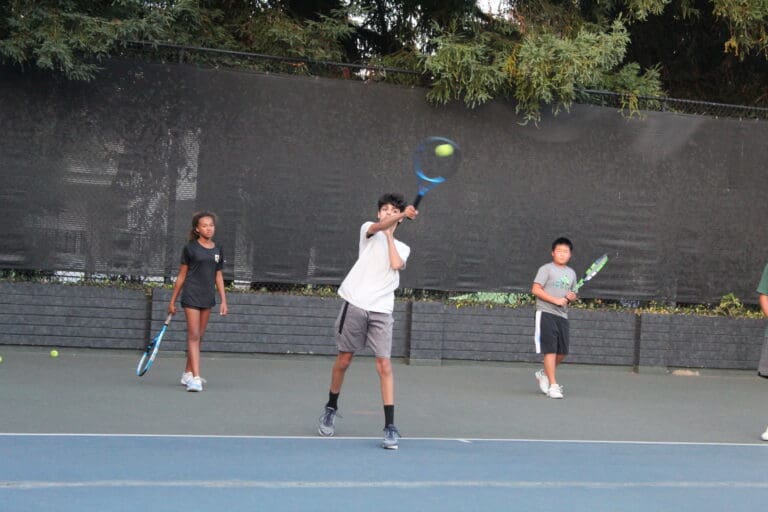
In the high-tempo world of competitive adult tennis across Silicon Valley, performance often comes down to serve velocity and heavy groundstrokes. Players want to accelerate the racket faster through the hitting zone. They work on timing, footwork, and racket speed. Yet one critical part of the swing often receives less attention: the body’s ability to slow the arm down after contact.
During tennis lessons Mountain View players take to improve their competitive performance, shoulder strength should be part of the conversation. Powerful serves require more than strong chest and shoulder muscles. They also depend on the muscles that control the arm during the follow-through. These muscles absorb force and help protect the shoulder joint from excessive stress.
At Silicon Valley Tennis Academy, Coach Francisco Ruiz emphasizes the relationship between acceleration, deceleration, and long-term athletic development. Players who want to serve harder must also develop the strength and control needed to stop the arm safely. This principle applies to flat serves, kick serves, overheads, and heavy groundstrokes.
For adult players who compete in USTA leagues or participate in demanding practice sessions, shoulder conditioning can support consistency and reduce unnecessary strain. The goal is not simply to generate more racket speed. It is to build a body that can handle the forces created by repeated high-intensity swings. Players can explore the Silicon Valley Tennis Academy website to learn more about its tennis instruction.
The tennis serve places substantial demands on the shoulder. During the acceleration phase, the arm rotates rapidly as the racket moves toward the ball. Sports biomechanics research has documented exceptionally high internal rotation speeds during the serve, with some estimates exceeding 2,000 degrees per second.
The shoulder’s structure allows an impressive range of motion. The glenohumeral joint is a ball-and-socket joint formed by the head of the upper arm bone and the shoulder socket. This arrangement allows players to reach for high serves, stretch for wide volleys, and execute overhead shots.
However, that mobility also creates a stability challenge. The surrounding muscles must coordinate to control the joint throughout the stroke. Without adequate strength, endurance, and movement control, repeated high-speed swings can place excessive demands on the shoulder.
The service motion can be divided into three main phases.
During preparation, the shoulder moves into external rotation. The chest, pectoral muscles, and other structures contribute to the loading process. This movement helps prepare the body for the forward swing.
The internal rotators, including the pectoralis major, subscapularis, latissimus dorsi, and anterior deltoid, help drive the racket forward. These muscles shorten under tension during concentric contractions.
After contact, the arm continues moving because of the momentum generated during the swing. The posterior rotator cuff, posterior deltoid, and scapular stabilizers help slow the arm. They absorb energy through eccentric contractions, in which muscles lengthen while remaining under tension.
This final phase is essential to shoulder control. The infraspinatus and teres minor are particularly important for external rotation and dynamic shoulder stability. The supraspinatus also contributes to rotator cuff function. Meanwhile, muscles such as the rhomboids, trapezius, and serratus anterior help control the shoulder blade.
When these muscles cannot manage the demands placed on them, players may experience fatigue, discomfort, or reduced control. Shoulder pain can have several causes, including rotator cuff problems, changes in technique, training volume, and mobility limitations. Shoulder impingement is one possible condition, but persistent pain should be assessed by a qualified healthcare professional.
During tennis lessons Mountain View players attend, understanding these mechanics can help them appreciate why shoulder conditioning belongs alongside technical training. Silicon Valley Tennis Academy provides another resource for players interested in learning about available tennis instruction and training opportunities.
Coach Francisco Ruiz uses a simple mechanical comparison to explain why acceleration and deceleration must work together.
Imagine driving a high-performance sports car capable of reaching 200 miles per hour. The engine can generate tremendous speed, but the brakes are worn out. Would you feel comfortable pressing the accelerator all the way down?
Probably not. You would know that the car could move faster than its braking system could safely manage.
The same principle applies to tennis. A player may have the strength and technique to generate a powerful serve, but the muscles responsible for slowing the arm must also handle the resulting force.
Strong deceleration muscles do not automatically guarantee a faster serve. Serve velocity depends on several factors, including technique, timing, leg drive, trunk rotation, shoulder function, and racket mechanics. However, appropriate strength and conditioning can help players tolerate training demands and maintain better control.
At Silicon Valley Tennis Academy, players can work on developing a more complete understanding of athletic performance through technical instruction and appropriate conditioning. Coach Francisco Ruiz connects these physical principles to the movements players perform on court. Rather than focusing only on how quickly the racket travels forward, players should also consider what happens immediately after contact.
This approach supports a more complete understanding of athletic performance. Players can work toward greater racket speed while building the physical capacity needed for repeated serves and groundstrokes.
For adults participating in tennis lessons Mountain View programs, this balance matters. A player who can practice consistently, recover appropriately, and maintain sound mechanics has more opportunities to improve over time.
Shoulder conditioning should target the muscles responsible for rotation, scapular control, and the management of repeated overhead movements. The following exercises can form part of a suitable training program when performed with appropriate resistance and technique.
Players should choose exercises based on their current ability, training history, and any existing symptoms. Anyone experiencing shoulder pain should seek professional guidance before adding demanding resistance exercises.
Target muscles: Infraspinatus, teres minor, and supporting shoulder stabilizers.
External rotation exercises help strengthen muscles that control the shoulder during serving and overhead movements.
To perform the exercise, attach a resistance band or cable at a suitable height. Position the upper arm approximately level with the shoulder and bend the elbow to about 90 degrees. Rotate the forearm upward and backward within a comfortable range while keeping the upper arm controlled.
Use light resistance at first. Avoid arching the back, shrugging the shoulder, or forcing the arm into an uncomfortable position.
For tennis players, this exercise develops external rotation strength. It can also help prepare the shoulder for the demands of serving when incorporated into a well-designed conditioning program.
The lowering phase can be performed slowly to emphasize eccentric control. However, the movement should remain comfortable and controlled rather than being forced through fatigue.
During tennis lessons Mountain View players take with Coach Francisco Ruiz, the objective is to connect physical preparation with the technical demands of the serve. Conditioning should complement sound mechanics, not replace them.
Target muscles: Rhomboids, middle trapezius, latissimus dorsi, and other muscles involved in scapular control.
The shoulder blade provides a foundation for arm movement. When the scapular muscles work effectively, the shoulder can move through its range of motion with better coordination.
To perform a low row, sit or stand with a resistance band or cable in front of the body. Pull the handles toward the torso while keeping the shoulders relaxed. Allow the shoulder blades to move naturally, then return to the starting position under control.
Avoid excessive leaning backward or pulling the shoulders toward the ears. The goal is controlled movement rather than lifting the heaviest possible resistance.
Rows strengthen muscles that contribute to upper-body pulling and shoulder blade control. These qualities can support tennis movements that involve rotation, racket preparation, and follow-through.
Rows do not directly prevent every shoulder injury. Their value comes from being part of a balanced program that also addresses external rotation strength, mobility, endurance, and technique.
Silicon Valley Tennis Academy encourages players to view physical conditioning as one part of a larger development process. Coach Francisco Ruiz can help players understand how upper-body strength relates to their on-court movements.
Target muscles: Posterior deltoid, rhomboids, and supporting muscles of the upper back.
Prone snow angels help players practice controlled shoulder blade movement. They can be useful for developing awareness of upper-back positioning and strengthening muscles involved in shoulder control.
Lie facedown on a mat with the arms positioned overhead. Keep the neck comfortable and avoid forcing the lower back into an exaggerated arch. Slowly move the arms outward and downward, following a snow-angel pattern as your range of motion allows.
Keep the movements smooth. Do not lift the arms higher than your mobility permits. If the exercise causes shoulder pain, stop and seek appropriate guidance.
Players can begin with a small range of motion and gradually progress as control improves. The focus should remain on quality rather than speed.
The exercise does not reproduce the full mechanics of a tennis serve. Instead, it trains supporting muscles that contribute to upper-body control during overhead activity.
For players enrolled in tennis lessons Mountain View programs, these exercises can complement technical instruction and other strength work. A coach can help identify movement habits that may benefit from additional attention.
Target muscles: Wrist flexors, wrist extensors, and forearm rotators.
The wrist and forearm play important roles in racket control. They help players adjust the racket face, manage grip pressure, and produce different types of shots.
A balanced program can include light wrist curls, reverse wrist curls, controlled pronation and supination, and suitable mobility exercises.
For wrist curls, support the forearm on a bench or your thigh. Move the wrist through a comfortable range while holding a light dumbbell. Keep the movement controlled and avoid using momentum.
For pronation and supination, hold a light implement and rotate the forearm slowly in both directions. Begin with minimal resistance, particularly if you have a history of elbow or wrist discomfort.
These exercises do not directly strengthen the rotator cuff. Their purpose is to develop forearm capacity and improve control of the structures that manage racket movement.
Forearm conditioning should also avoid excessive volume. Players who perform frequent serves, volleys, and groundstrokes already place considerable demands on the wrist and elbow.
At Silicon Valley Tennis Academy, a balanced training approach recognizes that the shoulder, elbow, wrist, and trunk all contribute to racket control. Coach Francisco Ruiz can help players connect their physical preparation to the technical requirements of tennis.
Strength training is only one part of shoulder care. Technical habits can also influence how a player manages force during a swing.
Two areas deserve particular attention: grip pressure and racket preparation.
Many players grip the racket too tightly, especially when attempting to hit harder. Excessive tension can restrict comfortable wrist movement and contribute to unnecessary fatigue in the forearm.
A relaxed grip allows the hand and arm to move more naturally. Players should maintain enough pressure to control the racket without squeezing it as tightly as possible throughout the entire stroke.
Grip pressure will vary depending on the shot. A volley may require a different feel from a serve or groundstroke. The goal is to maintain control while avoiding unnecessary tension.
Coach Francisco Ruiz emphasizes the value of efficient movement during tennis lessons Mountain View players attend at Silicon Valley Tennis Academy. Players should learn to generate racket speed through coordinated movement rather than relying on excessive muscular tension.
Racket preparation should support a continuous, coordinated swing. Abrupt movements or unnecessary tension can make timing more difficult and may affect how efficiently a player transfers energy through the body.
However, there is no single backswing pattern that works for every player. Preparation depends on the shot, playing style, mobility, and level of experience.
A coach can evaluate whether a player’s racket preparation supports good timing and comfortable shoulder mechanics. Adjustments should be based on observed movement rather than a rigid rule that every player must use the same swing.
For example, a player who rushes the racket backward may benefit from practicing a smoother preparation sequence. Another player may need to improve body rotation or contact-point consistency.
During tennis lessons Mountain View players receive, technical adjustments should complement physical conditioning. Strong muscles can support movement, but they cannot compensate for every technical problem.
A shoulder conditioning program should fit the player’s schedule, playing level, and physical needs. Adding too many exercises at once can create unnecessary fatigue, especially for adults who already serve frequently.
A sensible approach begins with a manageable routine.
Start with movement quality. Learn each exercise with light resistance. Keep the shoulder, elbow, and wrist in comfortable positions. Avoid rushing through repetitions.
Progress gradually. Increase resistance or repetitions only when you can maintain good technique. More weight is not always better, particularly for smaller rotator cuff muscles.
Balance tennis and strength sessions. High-volume serving can place considerable demands on the shoulder. Avoid adding intense shoulder workouts without considering your existing practice and match schedule.
Include recovery. Muscles need time to adapt to training. Sleep, appropriate rest, and sensible workload management all contribute to recovery.
Monitor symptoms. Mild muscular fatigue can occur during training, but sharp pain, worsening discomfort, weakness, or a persistent loss of motion should not be ignored. Stop exercises that cause pain and consult a qualified healthcare professional.
Review technique regularly. A coach can assess serve mechanics, racket preparation, and follow-through. Physical conditioning and technical instruction should work together.
Players can also benefit from a broader training plan that includes lower-body strength, trunk rotation, balance, mobility, and cardiovascular conditioning. Tennis performance depends on the coordination of the entire body, not just the shoulder.
Silicon Valley Tennis Academy provides a setting where players can work on technique and athletic development together. Under the guidance of Coach Francisco Ruiz, players can focus on practical improvements that support their current level and long-term goals.
Competitive adult players often want immediate improvements in serve speed, consistency, and match performance. Those goals matter, but sustainable progress requires more than hitting harder during every practice session.
Tennis lessons Mountain View players choose should help them develop sound mechanics, better movement patterns, and a clearer understanding of their physical strengths and limitations.
At Silicon Valley Tennis Academy, Coach Francisco Ruiz helps players connect technical instruction with the demands of real match situations. A player who understands the role of shoulder deceleration can make more informed decisions about training intensity, recovery, and physical preparation.
This does not mean every player needs an advanced strength program. Beginners and recreational players may benefit from basic movement instruction, manageable conditioning, and gradual increases in serving volume. More experienced competitors may need a structured plan that addresses their training demands and individual weaknesses.
The right approach depends on the player. A history of shoulder pain, limited mobility, or repeated fatigue may require assessment by a physical therapist or another qualified healthcare professional.
For players looking to improve their tennis, the best starting point is a balanced development plan. Technical coaching, appropriate strength work, sound recovery habits, and consistent practice can all contribute to better performance.
Long-term tennis development depends on athletic durability as well as technical skill. A powerful serve requires coordinated acceleration, but the body must also control the arm after contact.
The posterior rotator cuff, posterior deltoid, and scapular stabilizers contribute to this process. Exercises such as external rotations, rows, prone snow angels, and balanced forearm conditioning can support a broader training program when selected and performed appropriately.
Grip pressure, racket preparation, and serve mechanics also deserve attention. These factors influence how players move and manage the repeated demands of tennis.
Through tennis lessons Mountain View players take at Silicon Valley Tennis Academy, Coach Francisco Ruiz helps connect the principles of movement, technique, and athletic development. The aim is to help players improve their skills while developing habits that support consistent practice and long-term participation.
Players who want to develop a stronger, more controlled game can learn more about Silicon Valley Tennis Academy and explore available instruction options. With appropriate coaching, gradual conditioning, and attention to recovery, players can work toward more effective serves and groundstrokes while taking better care of their shoulders.
No products in the cart.