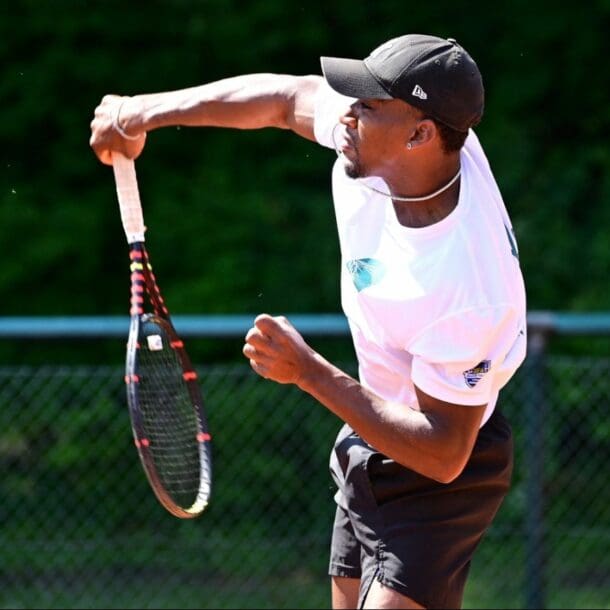
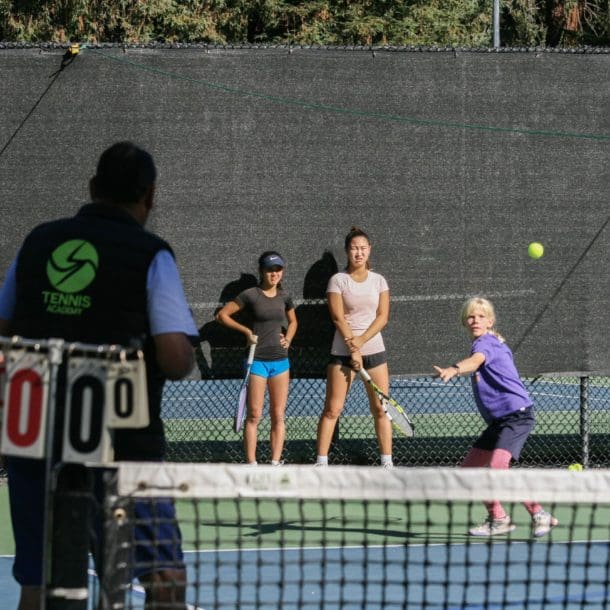
For competitive adult players and working professionals takingtennis lessons Mountain View, no single stroke generates more psychological anxiety or offers greater strategic leverage than the serve. Unlike groundstrokes, volleys, or returns, the serve is the only shot in tennis where the player possesses total control over the environment. There is no oncoming ball to react to, no opponent forcing a bad position, and no sudden movement required before the point begins.
Yet, despite this total control, the serve remains the most technically volatile stroke for intermediate and advanced adult players. Under high-pressure match situations, such as break points or tiebreakers, serve mechanics frequently deteriorate. Players experience inconsistent toss trajectories, erratic ball placement, double faults, and a sudden collapse in first-serve percentage.
At theSilicon Valley Tennis Academy (SVTA), head coach Coach Francisco Ruiz addresses serve volatility not by offering vague advice like “relax” or “take your time,” but by applying precise, diagnostic technical audits. By breaking down the serve into isolated mechanical components and utilizing sports science protocols, Coach Ruiz helps adult players in our tennis lessons Mountain View eliminate toss drift, master the trophy position, and construct a smooth, high-velocity serve that holds up under competitive pressure.
The Root Cause of Serve Instability: The Toss Trajectory
When an adult player experiences serve breakdown, their immediate assumption is often that their arm mechanics or wrist snap are at fault. However, biomechanical analysis reveals that over 80% of serve errors stem directly from inconsistent ball toss placement.
In his foundational manual Teaching Tennis, veteran coach Martin van Daalen emphasizes that the toss is the master governor of the entire serving kinetic chain. If the ball is tossed two inches too far back, to the left, or too low, the body is forced to make rapid, subconscious compensations during mid-swing:
Toss Falling Behind the Head: Forces the player to arch their lower back excessively, collapsing the kinetic chain and pushing the ball long past the baseline.
Toss Drifting Too Far Right (for right-handers): Causes the shoulder girdle to open prematurely, resulting in a flat slice that catches the top of the net.
Toss Dropping Too Low: Forces the player to truncate their racquet drop, rushing contact and hitting with an “arm-only” push rather than explosive upward leg drive.
In ourtennis lessons Mountain View, Coach Francisco Ruiz begins every serve diagnostic audit by evaluating the placement and release of the toss. This approach helps players identify the underlying causes of their serving problems instead of repeatedly correcting the symptoms.
The “Placement Cup” Drill: Automating Toss Consistency
To fix an erratic toss, Coach Francisco Ruiz utilizes targeted kinaesthetic placement drills. One of the most effective methods taught at theSilicon Valley Tennis Academy is the Placement Cup Drill:
Setting the Target: A target or small container is placed inside the baseline, approximately 12 to 18 inches in front of the server’s front toe and slightly inside the right net post line (for right-handed players).
Straight-Arm Placement: Players practice lifting the toss arm without a racket. The arm must remain straight, lifting smoothly from the shoulder socket like an elevator, rather than flicking from the elbow or bending at the wrist.
Fingertip Release: The ball must rest on the pads of the fingers (like holding an egg) rather than deep in the palm. The release occurs at eye level, allowing the ball to slide gently upward without spin.
The Gravity Audit: The player lets the tossed ball fall back to the court without swinging. If the ball lands directly inside the target container, the toss trajectory is deemed optimal.
By repeating this isolated placement drill for 5 minutes at the start of every session, players develop precise proprioceptive memory in the non-dominant shoulder, automating a consistent toss height and location regardless of match tension.
For players attendingtennis lessons Mountain View, this type of structured repetition provides a practical way to develop greater control over the serve. Rather than hitting hundreds of serves with the same inconsistent toss, players learn to establish reliable placement before introducing the full serving motion.
Optimizing the Trophy Position and Kinetic Loading
Once toss placement is stabilized, the diagnostic audit moves to the mid-swing loading phase: The Trophy Position.
In Tennis Anatomy, strength specialist Mark Kovacs highlights that the trophy position is the vital junction where potential energy stored in the lower body transitions into kinetic energy destined for the ball. Key structural checkpoints audited by Coach Francisco Ruiz include:
Leg Flexion and Hip Tilt: Both knees must bend deep into an athletic load, with the hips tilted slightly upward toward the oncoming ball. This knee flex stores elastic energy in the quads and glutes, ready to drive the body up and into the court.
The “Racket Drop” Valley: As the toss reaches its apex, the racket head must drop deep behind the back (scratching the back position). This stretches the chest, anterior deltoids, and lats, creating a powerful catapult effect when the arm accelerates upward.
Elbow Alignment: The dominant elbow must remain at or slightly above shoulder level. Dropping the elbow too low causes “elbow dragging,” which places immense torque on the medial elbow joint and drastically reduces racket head speed.
AtSilicon Valley Tennis Academy, these checkpoints help players understand how individual body movements contribute to the overall serve. A technically sound trophy position creates a stronger foundation for acceleration, timing, and controlled contact.
During tennis lessons Mountain View, players can also benefit from video comparisons of their serving positions. A coach can record the movement from different angles, identify unnecessary adjustments, and help players understand exactly where their mechanics begin to break down.
This makes the technical audit more precise. Players are no longer relying entirely on how a movement feels. They can also see what happens during each stage of the serve.
Process Over Outcome: Winning the Mental Battles
Fixing serve mechanics requires a complete shift in mental focus. When players focus strictly on match outcome, worrying about double-faulting or missing a first serve, muscle tension increases, causing the shoulder and wrist to stiffen up during the backswing.
Following the coaching philosophy of Paul Annacone and Brad Gilbert’s Winning Ugly, Coach Francisco Ruiz trains players to maintain a process-oriented pre-serve routine:
Breathe and Reset: Take two slow bounces of the ball to lower heart rate and clear mental noise.
Visualize the Target: Pick a specific target box in the service court (e.g., wide to the backhand or T down the middle).
Execute the Cue: Focus entirely on a single physical cue (such as “smooth lift, high contact”) rather than thinking about the score or the opponent.
By committing to a repeatable process, adult players remove fear from the serve, allowing their natural mechanics to flow freely even on crucial break points.
The mental component is particularly important for working professionals and competitive adults who may have limited opportunities to practice during the week. Consistency becomes easier when players have a simple routine they can repeat during training and competition.
Through tennis lessons Mountain View, players can develop this routine alongside their technical improvements. Coach Francisco Ruiz emphasizes the importance of connecting preparation, movement, and execution. The objective is to make the serve more predictable, even when the match becomes difficult.
Why Consistent Technical Audits Matter for Competitive Adult Players
Serving improvements rarely happen through one isolated correction. Players need to understand how their toss, body positioning, racket drop, and contact point work together.
A technical audit provides a structured way to evaluate these elements. It also gives players a clear starting point for their next practice session.
AtSilicon Valley Tennis Academy, this systematic approach helps players focus on measurable improvements instead of making random adjustments. Working with Coach Francisco Ruiz allows players to identify recurring technical problems, understand their causes, and apply targeted drills to correct them.
For adults participating in tennis lessons Mountain View, this can make practice more productive. Instead of repeatedly hitting serves without knowing why certain attempts fail, players can work on specific mechanical improvements.
Video analysis also provides a useful record of progress. Players can compare their initial serving mechanics with later performances. They can identify improvements in toss consistency, trophy-position stability, and contact timing.
This process encourages accountability and gives players greater confidence in their development. It also helps prevent old technical habits from returning when match pressure increases.
Conclusion
A dependable, high-velocity serve is not born out of luck or raw muscle strength; it is constructed through systematic diagnostic audits and disciplined practice. By enrolling in tennis lessons Mountain View at theSilicon Valley Tennis Academy and working with Coach Francisco Ruiz, you will gain the tools to audit your serve, eliminate toss volatility, and master kinetic chain loading.
Through consistent technical assessments, targeted placement drills, and a repeatable pre-serve routine, competitive adult players can develop greater control over their serving mechanics.
The objective is not simply to hit harder. It is to build a reliable serve that combines placement, power, and consistency.
Step onto the court with complete confidence, knowing your serve will hold firm under any match pressure.