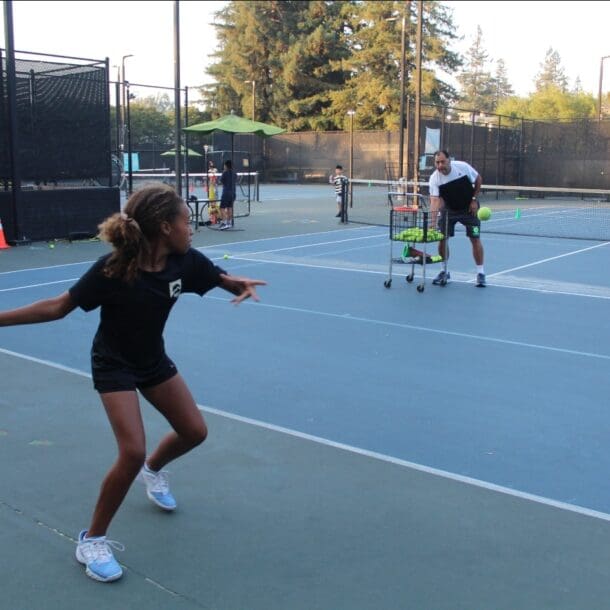
He had never held a racket before. He was nine years old, a little nervous, and standing at the edge of the court like it was the edge of something much bigger. His father had driven him to his first session atSilicon Valley Tennis Academy on a Saturday morning, mostly because the boy had asked about tennis every day for two weeks straight. What happened over the next eighteen months surprised both of them. The boy who could barely toss a ball consistently became a junior player competing in regional tournaments, holding his own against kids who had been playing for years.
"As you advance through various levels of instruction, you'll not only enhance your technical abilities but also cultivate important mental resilience on and off the court."
That kind of progression does not happen by accident. It happens because the right program, the right structure, and the right coach are all working together. For families in the Bay Area,tennis classes in Mountain View have become one of the most accessible entry points into that kind of structured development. AndSilicon Valley Tennis Academy has become the name most associated with that journey: from day one on the court all the way to competitive play.
Here is how that progression actually works.
The Beginner Stage: Building the Foundation
Every competitive player starts the same way. They start not knowing what they are doing. The beginner stage is not about winning points or learning strategy. It is about building a physical foundation that everything else will rest on later.
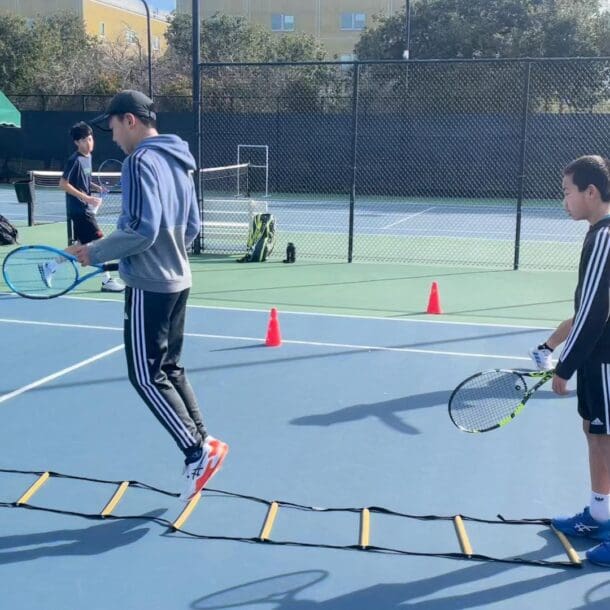
Tennis classes in Mountain View at the beginner level focus on grip, footwork, hand-eye coordination, and basic swing mechanics. These things seem simple. They are not. Done correctly, they become automatic. Done incorrectly, they become habits that hold a player back for years.
Coach Francisco Ruiz is particularly attentive at this stage. He understands that the beginner stage is where the most important work happens, even if it is the least glamorous. He watches how a child holds the racket. He watches how they move their feet before the ball even arrives. He corrects small things early, before they calcify into problems.
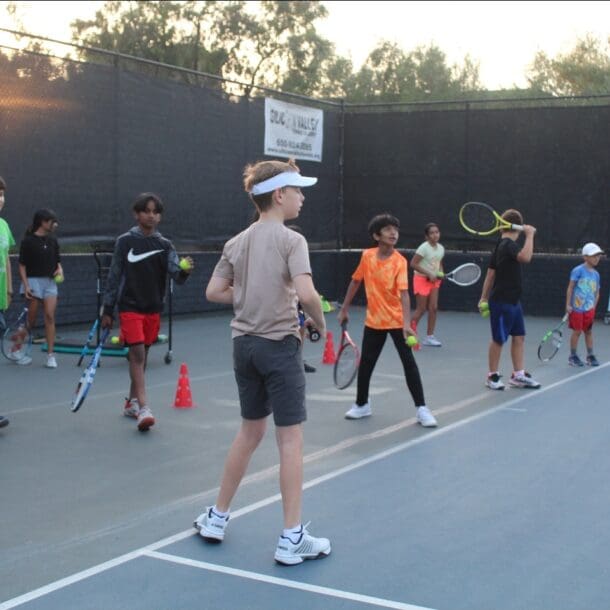
Silicon Valley Tennis Academy structures its beginner classes to keep group sizes small. More eyes on each player. More feedback in each session. More progress per hour on the court.
The Intermediate Stage: Where Real Development Happens
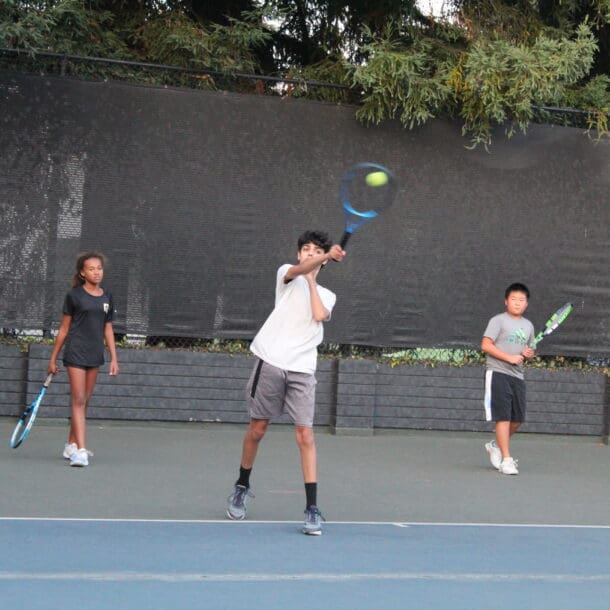
Once a player has the basics locked in, the real development begins. The intermediate stage is wheretennis classes in Mountain View start to look more like actual tennis. Players are rallying consistently. They are learning to direct the ball. They are starting to understand positioning and court geometry.
This is also the stage where many young players either fall deeper in love with the sport or begin to lose interest. The gap between beginner and competitive can feel wide. Progress feels slower. The game gets more demanding.
Coach Francisco Ruiz bridges that gap through a teaching philosophy built on encouragement and honest feedback. He does not let players coast. He also does not let them feel overwhelmed. He identifies what each player does well and builds their confidence around those strengths while quietly and consistently addressing their weaknesses.
Silicon Valley Tennis Academy’s intermediate program introduces players to match play for the first time. Structured practice games. Point situations. Decision-making under mild pressure. It is the closest thing to a dress rehearsal for competitive tennis, and it prepares players better than any amount of isolated drilling alone.
The Competitive Stage: Stepping Into a Bigger Arena
The competitive stage is where training intensity increases, mental preparation becomes part of the curriculum, and players begin entering junior tournaments. Coach Francisco Ruiz plays a central role here. He knows what tournament tennis demands from young players. He knows the emotional side of competing: how to handle losing a close match, how to stay focused in a third set, how to recover from a bad game and keep playing.
Tennis classes Mountain View at this level are more individualized. Coaching attention is more targeted. The feedback is more specific. Players are being prepared not just to participate in competition but to be genuinely competitive within it.
What Makes Silicon Valley Tennis Academy Different
Many academies offer beginner, intermediate, and advanced tracks. What separatesSilicon Valley Tennis Academy is not the structure itself. It is the quality of attention at every level of that structure.
Coach Francisco Ruiz does not treat beginner classes as less important than competitive training. He brings the same focus and intentionality to a child’s first session as he does to a junior player preparing for a tournament. That consistency of care is what produces consistent results.
The academy also keeps communication open with parents throughout the progression. Parents are updated on where their child is, what they are working on, and what the next step looks like.Tennis classes in Mountain View can feel like a black box at some programs: children go in, something happens, and parents hope for the best.Silicon Valley Tennis Academy operates differently. Progress is visible. Goals are shared.
Conclusion
The journey from beginner to competitive tennis player is not short. It takes time, the right environment, and coaches who genuinely care about each player’s development.
Silicon Valley Tennis Academy, and the work of Coach Francisco Ruiz in particular, has made that journey accessible and well-structured for families across the Bay Area.Tennis classes in Mountain View have never offered a clearer path from first grip to first tournament.
If your child is at any point on that path: just starting, somewhere in the middle, or ready to compete,Silicon Valley Tennis Academy is the place to take the next step.