November 3, 2026
Lifestyle
· Training
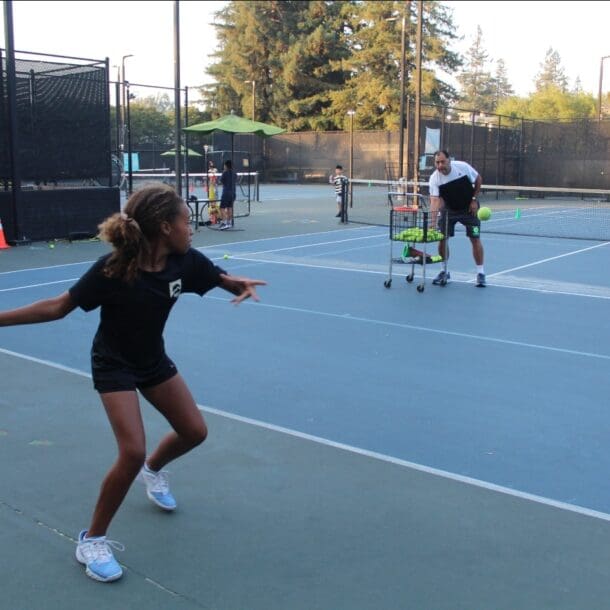
For competitive adult tennis players in USTA leagues and regional tournaments across the Bay Area, the second half of a tight set often brings a frustrating shift. Early in the match, your tactical choices are sharp, your footwork is crisp, and you execute your game plan with calm confidence. However, as grueling baseline rallies mount and physical fatigue sets in, subtle breakdowns begin to occur. You start taking reckless, low-percentage risks, misjudge incoming ball depth, or freeze on crucial points.
In our high-performance tennis classes in Mountain View at Silicon Valley Tennis Academy (SVTA), Head Coach Francisco Ruiz emphasizes that these performance breakdowns are not always the result of poor technique or a lack of tactical knowledge. Instead, they can stem from physical fatigue affecting cognitive decision-making. When heart rates spike and physical demands accumulate, players may abandon disciplined court geometry in favor of hasty, high-risk shot selection.
To help working professionals and competitive adults break through this endurance barrier, Coach Francisco Ruiz integrates tactical decision-making directly into high-intensity physical conditioning. By combining anaerobic interval training with real-time cognitive audits, players in our tennis classes Mountain View learn to manage their physical responses, maintain mental clarity under pressure, and close out tough matches with greater strategic discipline.
This approach is an important part of how Silicon Valley Tennis Academy develops competitive adult players. Physical conditioning matters, but players must also learn to make good decisions when their bodies are tired. The goal is not simply to survive demanding rallies. It is to execute the right shot, maintain sound positioning, and stay committed to a clear game plan.
Tennis is an intermittent, high-intensity sport. Points involve explosive movements, rapid changes of direction, and repeated accelerations. These efforts are followed by relatively short recovery periods. During demanding rallies, the body relies on several energy systems to support repeated muscular contractions and maintain movement quality.
As physical fatigue increases, it can affect the central nervous system and several aspects of cognitive performance.
Tracking the ball requires continuous coordination between the eyes, head, and body. Players must identify the incoming ball’s trajectory, judge its speed, anticipate its bounce, and position themselves for contact.
Fatigue can make these tasks more difficult. A player may begin watching the ball less consistently or struggle to judge its depth. The result is often a late contact point, a mistimed swing, or poor positioning.
This becomes particularly problematic against opponents who use heavy topspin, changes of pace, and deep groundstrokes. Even a small delay in recognizing the ball’s trajectory can affect the quality of the next shot.
During our tennis classes Mountain View, Coach Francisco Ruiz encourages players to maintain visual discipline throughout demanding movement drills. The objective is to keep watching the ball rather than allowing physical discomfort to distract from the task.
Physical distress can also affect attention. When players become exhausted, they may concentrate too heavily on their own discomfort.
Instead of reading the opponent’s positioning, they begin thinking about tired legs, heavy breathing, and the difficulty of reaching the next ball. Their awareness of the wider court situation becomes limited.
This creates tactical problems. A player may fail to notice an opponent moving toward the backhand corner or miss an opportunity to attack an exposed area of the court.
Silicon Valley Tennis Academy addresses this challenge by requiring players to remain aware of their opponent’s position, shot selection, and movement patterns during physically demanding exercises.
One of the most noticeable effects of fatigue is impatience.
A player who has spent several minutes defending against powerful groundstrokes may become desperate to finish the next rally. Rather than constructing the point, they attempt a difficult down-the-line winner or attack a ball from an unfavorable position.
These decisions often produce unforced errors.
The problem is not necessarily a lack of technical ability. It is a breakdown in tactical discipline. Players know which shots offer the highest probability of success, but physical discomfort makes it harder to follow that knowledge consistently.
In our adult tennis classes in Mountain View, players learn to recognize these patterns and maintain their decision-making standards even when rallies become physically demanding.
At the Silicon Valley Tennis Academy, Coach Francisco Ruiz emphasizes the connection between physical conditioning and tactical execution.
Traditional fitness exercises can improve endurance, speed, and recovery. However, competitive tennis requires more than the ability to run repeatedly. Players must make decisions while moving at high speed, responding to changing situations, and managing physical discomfort.
In our specialized tennis classes Mountain View, Coach Ruiz uses cognitive matchplay exercises to help adult players develop these abilities.
The exercises combine physical intensity with deliberate tactical decisions.
Players participate in rapid-fire movement drills that require repeated changes of direction and shot selection.
One example is the six-ball directional drill. Players must:
The sequence creates physical demands similar to those experienced during extended baseline exchanges.
As players become tired, Coach Ruiz monitors their movement quality, recovery positioning, and ability to maintain shot consistency.
The objective is to develop movement habits that remain reliable even when physical demands increase. These are important skills that players can continue developing through structured tennis training at Silicon Valley Tennis Academy.
Physical conditioning becomes more valuable when players must think while performing demanding movements.
During selected drills, players are required to identify their intended target before making contact with the ball. They may call out instructions such as:
This exercise forces players to identify a target rather than simply reacting to the incoming ball.
It also helps expose decision-making problems. A player may have enough physical ability to reach a ball but struggle to identify the best response.
Coach Francisco Ruiz uses these exercises to develop better connections between tactical awareness and physical execution.
Players in tennis classes Mountain View must learn to make purposeful decisions, even when their legs are tired and their breathing becomes heavier.
Between points, players need a reliable recovery routine.
Without one, frustration and physical discomfort can carry into the next rally. A missed shot may lead to rushed preparation, while heavy breathing can prevent players from approaching the next point with a clear plan.
The 10-second reset routine provides a simple structure:
The breathing pattern helps players settle their breathing and regain composure. The tactical objective gives their attention something productive to focus on.
Rather than dwelling on the previous point, players prepare for the next one.
This is particularly useful in league matches, where maintaining emotional control can make a significant difference during closely contested sets. Players can practice these habits during adult tennis training at SVTA.
When fatigue strikes, lower-body movement often becomes less efficient.
Players may begin standing too upright, taking smaller adjustment steps, or failing to recover properly after hitting the ball. Their split-step becomes delayed, and they rely increasingly on their arms to generate power.
These changes affect both shot quality and court coverage.
To preserve technical integrity during demanding match situations, Coach Francisco Ruiz reinforces three important footwork principles during our tennis classes Mountain View.
The split-step is fundamental to effective tennis movement.
It involves a small, balanced hop that prepares the player to move in either direction. Ideally, the landing coincides with the opponent’s contact with the ball.
This timing allows players to respond quickly without wasting unnecessary movement.
When tired, however, players often skip the split-step or execute it too early. They may become flat-footed, making it harder to react to unexpected changes in ball direction.
Coach Francisco Ruiz emphasizes consistent split-step timing throughout training. Players must maintain this habit during the final repetitions of a demanding drill, not just during the first few minutes.
The objective is to make the movement automatic.
Whether an opponent hits a powerful forehand or a short defensive slice, players need to remain balanced and ready to respond. This is one of the movement fundamentals reinforced in Silicon Valley Tennis Academy’s training sessions.
Choosing the right recovery movement helps players conserve energy and return to an effective court position.
Two important techniques are the crossover step and the side shuffle.
The Crossover Step
The crossover step is useful when a player has been pulled far outside the court.
For example, after chasing a wide forehand into the doubles alley, the player needs to cover significant ground to recover.
A crossover movement allows the player to regain distance quickly during the first few steps. This is more efficient than relying entirely on small shuffling movements when the recovery distance is substantial.
The Side Shuffle
The side shuffle is useful for smaller lateral adjustments near the center of the court.
It allows players to maintain a balanced position while keeping their body oriented toward the net.
This makes it easier to react if the opponent changes direction.
In our tennis classes Mountain View, players practice both movements so they can select the appropriate recovery technique instead of wasting energy on inefficient footwork.
Players interested in developing these skills can also explore Silicon Valley Tennis Academy’s tennis training programs.
Generating consistent power requires proper use of the lower body.
Players must bend their knees, load their hips, and maintain a stable base before accelerating into the ball.
When fatigue increases, these movements often disappear. Players stand upright and attempt to generate power primarily through their arms and shoulders.
This can reduce shot consistency and place unnecessary strain on the upper body.
Coach Francisco Ruiz encourages players to maintain proper lower-body engagement throughout demanding exercises. Good movement mechanics should not disappear simply because a player has completed several exhausting rallies.
Developing this consistency is one of the important benefits of structured adult tennis classes Mountain View.
When playing under extreme fatigue, attempting complicated shot combinations can become a recipe for unnecessary errors.
Competitive players sometimes make the mistake of increasing their tactical ambition when they should be simplifying their approach.
A better strategy is to rely on high-percentage patterns, trusted shots, and clear decision-making.
Coach Francisco Ruiz emphasizes three principles that help players maintain tactical discipline when their physical energy begins to decline.
When tired, eliminate unnecessary attempts at razor-thin sideline targets.
Instead, aim for larger areas of the court that provide a greater margin for error.
For example, a player can target the deep middle third of the opponent’s court rather than attempting to hit every groundstroke close to the baseline corners.
This approach offers several advantages:
Players should also maintain appropriate net clearance. Hitting with sufficient height gives the ball a safer margin while still allowing them to apply pressure.
The objective is not to play passively. It is to apply pressure without taking unnecessary risks.
These tactical principles are part of the competitive development approach at Silicon Valley Tennis Academy.
Every competitive player has at least one shot they trust more than others.
For some, it is a heavy cross-court forehand. For others, it may be a reliable backhand, a wide serve, or an effective approach shot.
When fatigue increases, players should look for opportunities to use these strengths.
For example, a player with a dependable forehand can use deep cross-court shots to move an opponent away from the center. This creates opportunities to attack the next ball without forcing a difficult winner.
The same principle applies to serving. A player with a reliable wide serve can use it to create space and dictate the next shot.
In tennis classes Mountain View, Coach Ruiz helps players understand how to build points around their strongest patterns rather than attempting unfamiliar or unnecessarily complicated combinations under pressure.
Physical exhaustion can create frustration.
Players may become angry after missing shots they normally execute with ease. They may also lose confidence when an opponent continues returning difficult balls.
This emotional reaction often creates a second problem. Instead of correcting the tactical mistake, players begin forcing shots and abandoning their original strategy.
The solution is to separate the result of the previous point from the decisions required in the next one.
A missed forehand does not mean the entire game plan needs to change. A lost rally does not justify attempting a low-percentage winner on the next ball.
Players should acknowledge the mistake, identify what needs correcting, and move forward.
This process-oriented approach helps maintain composure and prevents frustration from controlling shot selection. It is also a skill that Coach Francisco Ruiz encourages competitive adults to develop through purposeful practice.
Developing tactical discipline under fatigue requires consistent practice.
Competitive adults cannot expect to maintain excellent decision-making throughout a three-set match if their training only involves hitting groundstrokes under comfortable conditions.
Their preparation must include realistic movement demands, changing tactical situations, and exercises that test concentration.
This is where structured adult training becomes valuable.
At Silicon Valley Tennis Academy, Coach Francisco Ruiz emphasizes the importance of connecting technical development with practical match situations.
Our tennis classes Mountain View provide opportunities for adult players to work on several important areas:
These skills are relevant to adults competing in USTA leagues, local tournaments, and recreational matches where competitive standards matter.
Players also benefit from understanding their individual weaknesses. One athlete may struggle with recovery footwork, while another may lose tactical patience after several long rallies.
Identifying these patterns makes training more purposeful.
Instead of simply trying to become fitter, players learn which physical and mental habits need improvement to perform more consistently.
For adults looking to strengthen their competitive game, Silicon Valley Tennis Academy offers a structured environment where technical development, tactical awareness, and physical preparation work together.
Adults interested in improving their consistency can also explore tennis classes and training opportunities at SVTA.
True athletic conditioning is not just about how fast you can run or how many balls you can hit during a training session. It is also about how clearly you can think when your body wants to slow down.
Competitive tennis demands more than technical ability. Players must recognize opportunities, select appropriate targets, recover efficiently, and maintain emotional control throughout demanding matches.
By joining the high-performance tennis classes Mountain View at the Silicon Valley Tennis Academy and training under Coach Francisco Ruiz, adult players can develop the physical and mental habits needed for more consistent competitive performance.
Learn to protect your footwork mechanics under pressure. Develop reliable recovery routines. Simplify your tactical decisions when fatigue increases. Most importantly, understand that every point requires a deliberate decision, regardless of how tired you feel.
The next time you reach the final games of a closely contested set, your opponent may be just as exhausted as you are. The difference could come down to who maintains better movement, makes smarter decisions, and stays committed to the game plan.
Explore Silicon Valley Tennis Academy and discover how structured tennis classes Mountain View can help you develop the tactical discipline, physical consistency, and mental clarity required to compete at a higher level.
No products in the cart.