

October 20, 2026
Lifestyle
· Training
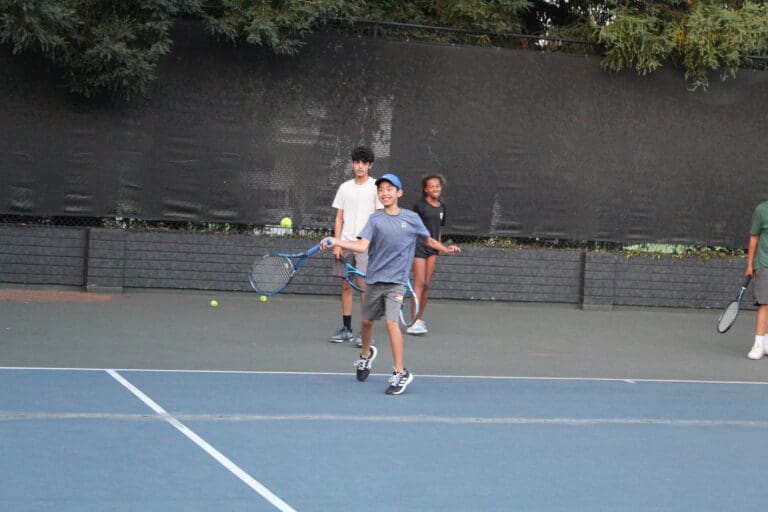
For competitive adult players and working professionals participating in tennis classes Mountain View, one court surface rarely fits every training need. Across Northern California, league matches and tournaments take place on different surfaces, including acrylic hard courts, synthetic clay, and traditional clay courts. Many recreational players view court surfaces as a simple change in ball speed or bounce height. However, each surface also changes how the body accelerates, stops, and recovers between shots.
At the Silicon Valley Tennis Academy, Coach Francisco Ruiz emphasizes the connection between physical conditioning and movement efficiency. Players must learn how surface friction affects their footwork, lower-body strength, and energy use. A player who moves effectively on a hard court may need different skills to perform well on clay.
Through structured tennis classes Mountain View players can use to improve their physical preparation, the academy helps adult competitors develop stronger movement patterns and better stamina. The goal is not simply to run faster. Players must learn to control their momentum, recover efficiently, and maintain good technique throughout a match.
Acrylic hard courts are common across the Bay Area. They provide a relatively consistent playing surface and predictable ball bounce. However, they offer little cushioning compared with softer court surfaces.
The traction between tennis shoes and a hard court can help players push off quickly. It also makes sudden stops physically demanding. When a player sprints toward a wide ball and plants a foot to change direction, the muscles around the knee, ankle, and hip must absorb and redirect considerable force.
In tennis classes Mountain View adults attend to improve competitive performance, hard-court conditioning should focus on several physical qualities.
Eccentric strength and knee control
When players stop suddenly, their quadriceps and other lower-body muscles work eccentrically. This means the muscles produce force while lengthening to control movement. Strong eccentric muscles help players absorb momentum and prepare for the next shot.
Without adequate strength and movement control, repeated hard stops can contribute to excessive loading around the knees and other lower-body structures. Patellar tendon pain, ankle problems, and other overuse injuries may become more likely when training volume increases too quickly.
Coach Francisco Ruiz can help players develop better deceleration mechanics through progressive strength work and controlled movement drills. Single-leg squats, step-downs, and lateral lunges can improve stability when performed with proper technique.
Explosive push-offs and calf strength
Hard-court tennis demands repeated accelerations. Players split-step, push off laterally, sprint toward the ball, and recover to prepare for the next shot. The calves, Achilles tendons, and muscles around the hips contribute to these movements.
Calf raises, controlled hopping exercises, and progressive plyometric drills can help develop the strength and reactive ability needed for court movement. However, players should build up gradually rather than immediately attempting high-impact exercises.
Silicon Valley Tennis Academy can incorporate these movements into a broader training plan that considers each player’s age, fitness level, playing schedule, and injury history.
Short bursts of high-intensity effort
Many tennis points involve brief periods of intense movement followed by recovery. Hard-court players need to accelerate quickly, reach the ball, stop under control, and prepare for the next exchange.
This requires more than general cardiovascular fitness. Players also need repeated-sprint ability, lower-body power, and the capacity to recover between points.
During tennis classes Mountain View competitive adults participate in, Coach Francisco Ruiz can use short shuttle runs, lateral movement drills, and timed recovery exercises to reproduce some of these demands. The emphasis should remain on movement quality. Faster repetitions are useful only when players can maintain control and proper technique.
Clay courts create a different movement environment. Their loose or granular surface can allow players to slide into shots when the court conditions and footwear permit it. Instead of relying entirely on abrupt stops, players learn to manage their momentum through controlled sliding and coordinated recovery steps.
Clay-court points can also involve extended baseline exchanges. The slower playing conditions associated with many clay courts give opponents more time to reach balls and defend against attacking shots. However, rally length varies considerably with player style, court conditions, and match tactics.
This combination of movement and endurance creates several conditioning priorities.
Aerobic endurance and muscular stamina
Players who compete in long baseline rallies must maintain their movement quality even as fatigue builds. They need enough aerobic capacity to recover between intense efforts and sufficient muscular endurance to keep moving effectively.
Long-distance running alone does not fully prepare a player for this challenge. Tennis requires repeated accelerations, changes of direction, and short periods of recovery.
Coach Francisco Ruiz can incorporate interval training, repeated court-length movements, and controlled point-based drills into tennis classes Mountain View adults use for competitive preparation.
For example, players might complete several short movement sequences with planned recovery periods. As their conditioning improves, the coach can gradually increase the number of repetitions or reduce the recovery time.
The objective is to maintain sound footwork late in a session, not simply to accumulate distance.
Hip strength and sliding control
Sliding requires coordination between the feet, hips, and trunk. Players must manage their momentum while keeping their body balanced enough to strike the ball.
The adductors on the inner thighs and the muscles around the outer hips contribute to lateral stability. The glutes and core muscles also help players control their position during wide movements.
Exercises such as lateral lunges, resistance-band side steps, and controlled single-leg movements can develop these qualities. Slider-board exercises may also help experienced players practice lateral movement in a controlled environment.
These exercises should progress gradually. Attempting aggressive slides without the necessary technique or strength can place unnecessary stress on the hips, knees, and groin.
At Silicon Valley Tennis Academy, surface-specific conditioning should complement actual court practice. Players need to develop the physical capacity for sliding before attempting to use it repeatedly at full speed.
Balance during open-stance shots
Clay-court players often hit forehands and backhands while moving laterally. They may also strike the ball while completing a controlled slide.
This requires coordination between the upper and lower body. The legs manage movement, while the trunk helps stabilize the torso and position the racket for contact.
Core exercises, rotational strength work, and controlled open-stance hitting drills can help players maintain balance. The aim is to produce reliable shots without losing control of their recovery position.
Coach Francisco Ruiz can build these skills into tennis classes Mountain View players attend to develop stronger baseline movement and more consistent shot execution.
Physical conditioning is only part of surface preparation. Players must also change how they approach the ball and recover after each shot.
The same footwork pattern will not work equally well in every situation. Players need to understand when to brake, when to slide, and how to position themselves for the next exchange.
Hard-court movement rewards precise positioning. Players need to arrive at the ball with enough control to transfer their weight into the shot and prepare for recovery.
Small adjustment steps help players organize their feet before contact. These steps allow them to make last-second corrections instead of reaching awkwardly for the ball.
The split-step is equally important. Players should time it around their opponent’s contact with the ball. This prepares them to react in different directions without committing too early.
During tennis classes Mountain View adults attend at Silicon Valley Tennis Academy, Coach Francisco Ruiz can use directional feeding drills to reinforce these habits.
A simple drill involves starting near the center of the baseline. The coach feeds balls alternately to the forehand and backhand sides. After each shot, the player recovers toward a suitable position before preparing for the next feed.
The drill can begin at a moderate pace. Speed should increase only when the player consistently demonstrates controlled stopping, balanced contact, and efficient recovery.
Clay-court movement requires players to anticipate where they will make contact. When the surface permits sliding, players must begin preparing for the slide before reaching the ball.
The slide should help control momentum and position the body for the shot. Players should not simply run toward the ball and attempt to skid at the last moment.
Recovery also requires practice. After completing the shot, players must regain a stable position and move toward an appropriate recovery area.
This does not always mean returning to the exact center of the baseline. The ideal position depends on the shot played, the opponent’s location, and the player’s tactical plan.
Coach Francisco Ruiz can introduce clay-style movement through progressive lateral drills. Players first practice controlled changes of direction, then develop their timing and balance as their confidence improves.
Players attending tennis classes Mountain View programs should also learn that sliding technique depends on the surface. Not every synthetic court behaves like traditional clay. Court conditions, footwear, and the manufacturer’s guidance all matter.
A useful conditioning plan should reflect the player’s competition schedule and the surfaces they regularly encounter. Training for hard courts and clay courts does not require two completely separate fitness programs. Many physical qualities transfer between surfaces.
The difference lies in how coaches prioritize and apply those qualities.
For hard-court preparation, a training week may emphasize:
For clay-court preparation, the emphasis may shift toward:
Both programs should include mobility, adequate recovery, and progressive increases in training load.
Players should also consider their existing workload. An adult who works full-time and plays league matches several evenings per week may not benefit from adding intense conditioning sessions every day.
A coach can help organize training so that demanding strength sessions do not consistently interfere with match performance. This is particularly important for players returning after an injury or increasing their weekly court time.
Silicon Valley Tennis Academy provides an environment where technical development and physical preparation can work together. Through tennis classes Mountain View adults can incorporate into their schedules, players can build movement skills that support their long-term performance.
Surface-specific conditioning does not end when a training session finishes. Nutrition, hydration, sleep, and recovery all influence how well players respond to repeated physical demands.
However, hard courts and clay courts do not automatically require completely different nutrition plans. The most important factors are exercise duration, intensity, temperature, sweat loss, and individual needs.
Recovery after hard-court training
Hard-court sessions may involve repeated braking, acceleration, and changes of direction. Players should pay attention to soreness around the knees, ankles, calves, and hips.
A sensible recovery routine includes light movement after training, comfortable mobility exercises, and sufficient time between demanding sessions. Foam rolling may help some players manage muscle soreness, but it should not replace appropriate strength training or medical care when needed.
Players should also avoid increasing their running volume, jumping volume, and tennis workload all at once. Gradual progression gives the body more time to adapt.
Coach Francisco Ruiz can help players identify when they need more recovery and when they are ready to increase the difficulty of their conditioning work.
Hydration during extended clay-court matches
Long matches can increase fluid loss, especially in warm weather. Players should arrive adequately hydrated and drink regularly during play.
For prolonged sessions or matches involving substantial sweating, an electrolyte drink may be useful. The amount needed depends on the player’s sweat rate, the temperature, and the length of the session.
Players should not rely on a fixed hydration rule that ignores individual differences. Drinking excessive amounts of plain water can also be harmful, so fluid intake should be sensible and adjusted to the conditions.
Nutrition to support repeated performance
Players need sufficient energy to sustain both court practice and physical conditioning. Meals containing carbohydrates can support training, while protein helps the body repair and build muscle.
After a demanding session, a balanced meal or snack containing carbohydrates and protein can support recovery. Players should also get enough sleep and avoid scheduling intense sessions back-to-back when fatigue affects their movement quality.
In tennis classes Mountain View adult competitors attend, these habits support a more consistent approach to physical development. The aim is to arrive at each session ready to learn, move well, and apply technical skills under pressure.
Injury prevention requires more than strengthening one muscle group or performing a particular stretch. It involves managing training load, improving movement technique, and responding appropriately to pain and fatigue.
Hard-court players should pay attention to repeated high-impact movements and sudden increases in jumping or sprinting volume. Clay-court players should build sliding skills progressively and develop the hip and groin strength needed for lateral movement.
Across both surfaces, several principles can help reduce unnecessary risk:
Players should also recognize that soreness and injury are not the same thing. Mild post-exercise soreness may occur after unfamiliar training, but sharp pain, swelling, or persistent discomfort deserves attention.
Coach Francisco Ruiz can help players adjust drills to their current ability and experience. This is particularly valuable for adults who are returning to tennis after a long break or balancing competition with demanding work schedules.
Effective adult tennis training must address more than racket technique. Players need to move efficiently, maintain concentration under pressure, and develop physical habits that support consistent performance.
At Silicon Valley Tennis Academy, Coach Francisco Ruiz can help players connect their conditioning work with the movements they use during actual matches. This approach makes physical training more relevant to the demands of tennis.
For example, an adult who struggles to recover after a wide forehand may benefit from a combination of hip strength, lateral movement practice, and better recovery positioning. A player who loses footwork quality late in a match may need improved endurance, better pacing, or a more efficient movement pattern.
The most useful training plan addresses the player’s actual needs instead of applying the same routine to everyone.
Players exploring tennis classes Mountain View can learn more about available programs through the Mountain View tennis academy website. Training options can help players work toward stronger movement, more reliable technique, and greater confidence on court.
The key is consistency. A single conditioning session will not transform movement mechanics. Regular practice, sensible progression, and feedback from a qualified coach help players turn physical improvements into better match performance.
Mastering tennis across different surfaces requires adaptability. Hard courts challenge players to accelerate and decelerate efficiently, while clay courts often demand sustained movement, lateral control, and the ability to slide when conditions allow.
Both surfaces require strength, balance, endurance, and sound decision-making. The difference is how players apply these qualities during each point.
Through tennis classes Mountain View players can use to develop their physical and technical skills, Silicon Valley Tennis Academy helps adult competitors build a more complete approach to tennis preparation. Under the guidance of Coach Francisco Ruiz, players can work on surface-specific footwork, lower-body strength, stamina, and recovery habits that support their goals.
Whether you compete regularly or want to move more confidently during recreational matches, training with the demands of your court surface in mind can make your preparation more effective.
Explore Silicon Valley Tennis Academy to learn more about tennis training opportunities in Mountain View. With consistent practice and a thoughtful conditioning plan, you can improve your movement, protect your long-term playing ability, and approach every match with greater confidence.
No products in the cart.

